Lean Portfolio Management (LPM)
Funding Value, Not Projects: The LPM Revolution
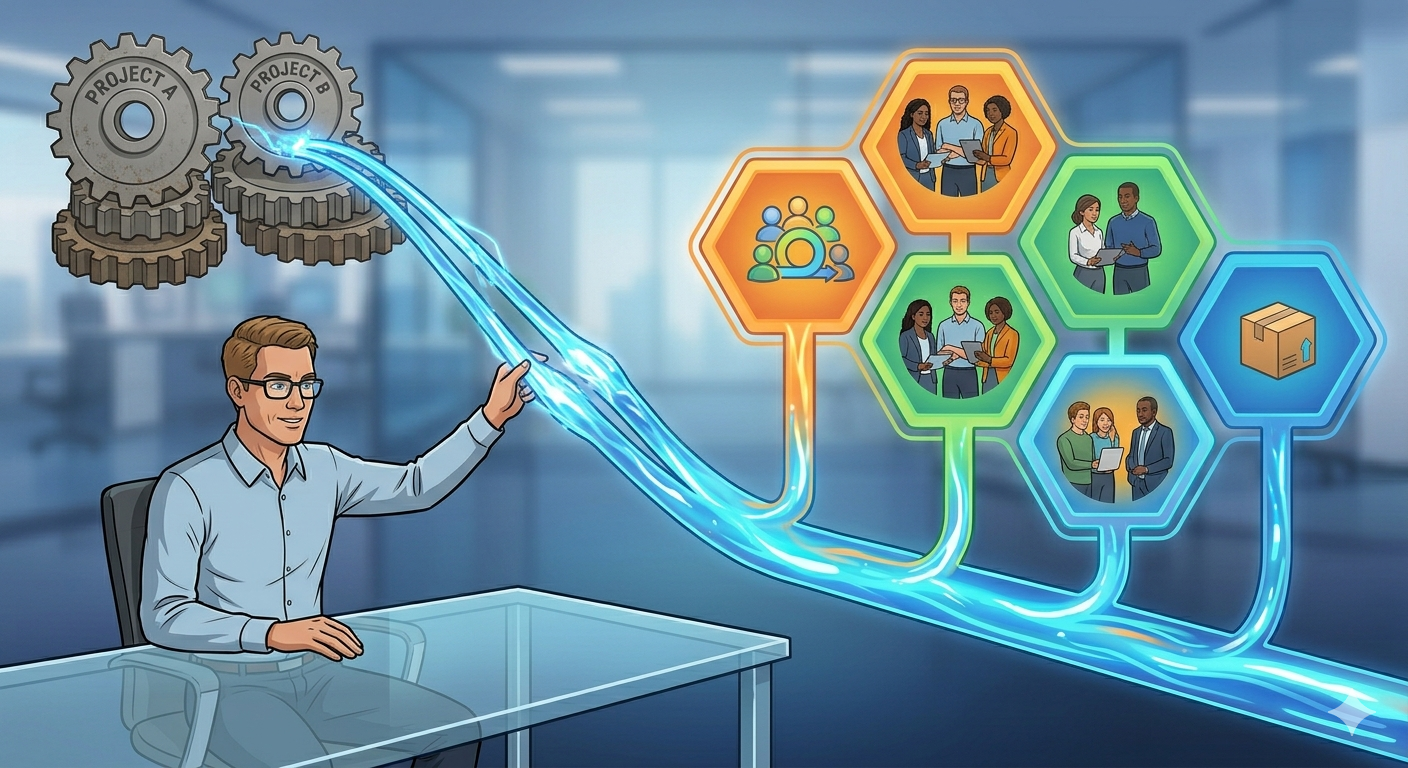
One of the biggest hurdles in any Agile transformation isn't the technology—it’s the Finance department. Traditional project-based accounting is the natural enemy of agility. When we fund a "project," we are essentially guessing the cost and value of an idea months before we start. Lean Portfolio Management (LPM) offers a modernized, economic approach.
The Shift from Projects to Value Streams
In a traditional model, we fund a project, hire a team, and then disband that team when the project ends. This destroys institutional knowledge. SAFe flips this by funding Value Streams—long-lived teams that work on a continuous flow of products.
Stable Teams: You don't move people to the work; you move the work to the stable, high-performing teams.
Elasticity: If a specific product becomes a massive success, the Portfolio can shift funding to that value stream instantly.
The Three Pillars of LPM Training
Implementing LPM is often the "final boss" of a transformation because it requires a shift in mindset for senior executives. Training in LPM covers:
Strategy and Investment Funding: Ensuring the portfolio is actually building what the company’s strategy dictates.
Agile Portfolio Operations: Decentralizing strategy execution so the teams can move faster.
Lean Governance: Managing oversight and audit requirements without the heavy "gate-keeping" of traditional PMOs.
Why It Matters
Without a certified understanding of LPM, organizations often find themselves with "Agile Teams" that are still being measured by "Waterfall Metrics." To bridge that gap, leadership must embrace the Lean-Agile mindset at the portfolio level.

Ready to put this into practice?
Join a SAFe certification course and master agile at scale.
Browse Courses →

